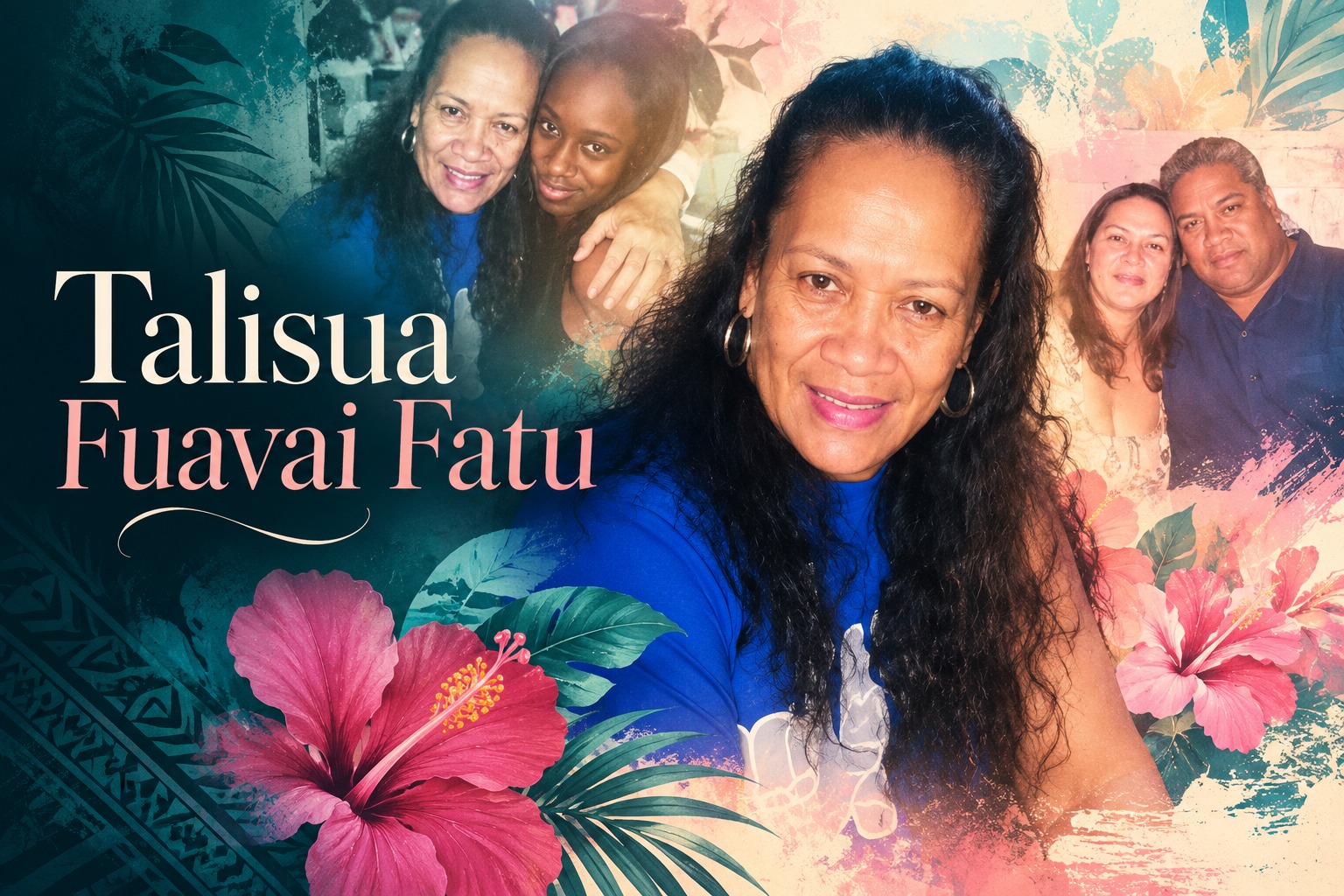
A mother within the Fatu wrestling family
Talisua Fuavai-Fatu is the wife of wrestler Solofa Fatu Jr., known as Rikishi, and the mother of Jey Uso, Jimmy Uso, and Solo Sikoa. Her own public profile is comparatively quiet, while her husband and sons have become familiar names in WWE.
I find the contrast in visibility useful without turning it into a story about her private feelings. The family’s wrestling careers are extensively public. Talisua’s clearly identified place is within the household as a spouse, mother, and grandmother.
Her marriage to Rikishi is generally dated to 1985. That same year, their twin sons Joshua and Jonathan were born. The relationship therefore sits near the beginning of a family chapter that later produced several prominent performers, although the achievements in the ring belong to the people who performed them.
Rikishi and a long wrestling career
Talisua’s husband was born Solofa Fatu Jr. in 1965. He became widely recognized as Rikishi during a long professional wrestling career, including a memorable period in WWE’s Attitude Era.
His career culminated in induction into the WWE Hall of Fame in 2015. Jimmy and Jey participated in honoring him, making the occasion a visible connection between the father’s career and the next generation’s work.
I regard that ceremony as an especially clear family milestone. It recognized Rikishi’s past accomplishments while placing his sons beside him as active performers. Talisua’s connection to the moment is familial; the induction was her husband’s professional honor.
Rikishi also became involved in wrestling instruction through Knokx Pro Wrestling Academy. That later work extended his participation beyond his own matches into training. It supplies another specific professional role within the household’s public history.
Joshua and Jonathan become The Usos
Joshua Samuel Fatu and Jonathan Solofa Fatu were born on August 22, 1985. They became known as Jey Uso and Jimmy Uso, respectively. As twins and tag-team partners, they developed a shared professional identity as The Usos.
Their WWE careers included multiple tag-team championships and prominent matches on major cards. The partnership combined a biological sibling relationship with a working relationship, giving the family’s next generation a distinct place in wrestling.
I think stating the names in full prevents a common confusion. Joshua is Jey, and Jonathan is Jimmy. Similar names and matching appearances can make brief descriptions difficult to follow, but they remain two separate people with individual careers as well as a partnership.
Their father was already a wrestler when they were growing up. Talisua’s motherhood belongs to that same family setting. It does not establish that every detail of their training came from her or that she held a professional role in the wrestling business.
Solo Sikoa and the younger generation
Joseph Yokozuna Fatu, known as Solo Sikoa, was born on March 18, 1993. He is another of Talisua and Rikishi’s sons. His birth came more than seven years after the twins, placing him in a later stage of the household’s chronology.
Solo entered WWE and became associated with both NXT and the main roster. His career includes an NXT North American Championship and a United States Championship. These are his accomplishments, separate from the tag-team achievements of his older brothers.
I find that separation important because the family is often discussed as one large unit. Jey and Jimmy’s partnership, Solo’s individual title history, and Rikishi’s earlier career are connected by kinship but remain different professional records.
Solo’s family life also makes Talisua a grandmother. Jey’s public family descriptions likewise include children. The next generation widens the household beyond the wrestlers most often shown together, although the grandchildren’s private lives do not need to become part of a public profile.
Other children and a wider household
Jeremiah Peniata Fatu is also identified among Talisua and Rikishi’s children. A childhood appearance on WWE Raw in 1997 forms one dated public moment in his biography. His later life has been less visible than those of Jey, Jimmy, and Solo.
The family material also contains references to additional children, but their names and the overall count are not presented consistently. I keep the central relationships clear rather than turn conflicting lists into a definitive roster.
A large household can contain both public performers and relatives who rarely appear in professional coverage. The difference does not determine their importance within the family. It determines how much of their biography can be described accurately in an article.
Talisua’s role therefore extends beyond the three best-known sons. The public spotlight falls most often on WWE names, while the family itself includes relationships that are not organized around televised matches.
The Anoa’i and Fatu family context
Through Rikishi, Talisua is connected with the broader Samoan wrestling family commonly discussed under the Anoa’i and Fatu names. That history includes performers such as The Wild Samoans, Yokozuna, Umaga, and Roman Reigns, alongside extended Maivia connections.
I think the wider context explains the recurring interest in Talisua. A viewer following one performer may soon encounter references to cousins, uncles, siblings, and older generations. Her household is one prominent branch of that larger network.
The network should not be treated as a claim that every person shares the same kind of biological relationship. Marriage, adoption, extended kinship, and professional association appear in discussions of these families. Talisua’s most direct documented relationships remain with her husband and children.
Later WWE Bloodline stories drew heavily on recognizable family connections, bringing renewed public attention to the household. The televised stories are performances, while the parent-child and sibling relationships described here belong to the actual family.
A chronology shaped by family milestones
The central dates create a straightforward sequence. Talisua and Rikishi’s marriage is placed in 1985, the twins were born that August, and Solo followed in 1993. Jeremiah’s childhood television appearance came in 1997, and Rikishi’s Hall of Fame induction in 2015 joined the father’s history with his sons’ public careers.
I see that sequence as a stronger portrait than an invented occupational résumé for Talisua. It identifies her place across several decades of family development without assigning her championships, businesses, or personal wealth that the biography does not establish.
FAQ
Who is Talisua Fuavai-Fatu?
She is Rikishi’s wife and the mother of WWE performers Jey Uso, Jimmy Uso, and Solo Sikoa. Her public identity is primarily familial. She has remained less publicly visible than the wrestlers in her household.
What are Jey and Jimmy Uso’s birth names?
Jey is Joshua Samuel Fatu, and Jimmy is Jonathan Solofa Fatu. They were born as twins on August 22, 1985, and became tag-team partners as The Usos. They are separate performers with both shared and individual wrestling histories.
How is Solo Sikoa connected with Talisua?
Solo, born Joseph Yokozuna Fatu in 1993, is her son with Rikishi. He is the younger brother of Jey and Jimmy. His WWE title achievements belong to his own career rather than to The Usos’ tag-team record.