One Artist and Several Public Names
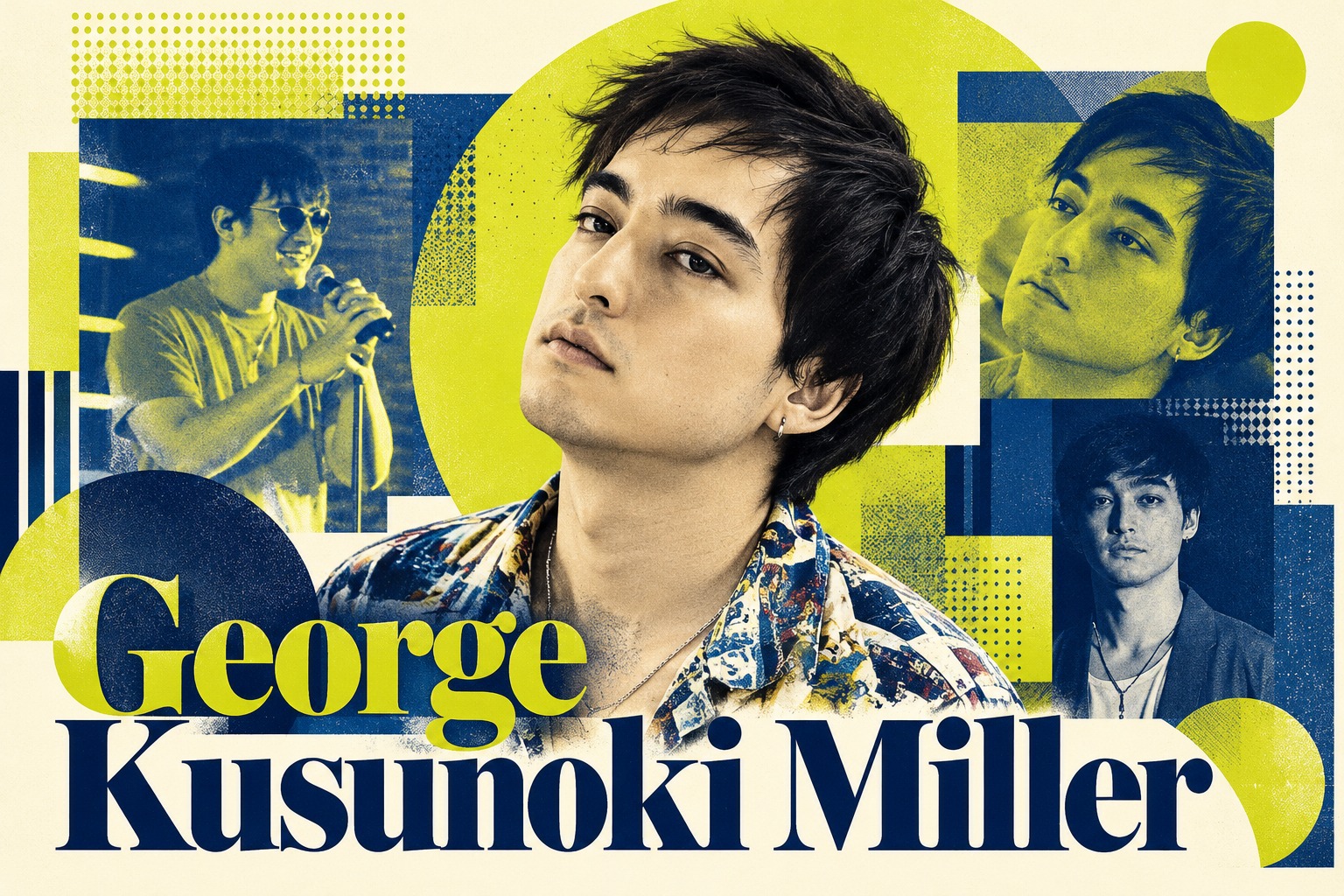
I find George Kusunoki Miller’s career fascinating because its different identities ask an audience to change how it listens. As Filthy Frank, he became associated with abrasive internet comedy. As Pink Guy, he made comedy music. As Joji, he developed an expressive musical career rooted in R&B, atmospheric production, and emotional restraint.
These names belong to the same artist, born on September 18, 1992, in Osaka, Japan. The distinction is artistic rather than genealogical. Joji is not a relative of Filthy Frank, and Pink Guy is not a separate performer whose career merely crossed his path.
The shift between identities was substantial. Online audiences had learned to expect spectacle and provocation. His later music asked for attention to mood, melody, and feeling. I see that change as the central event of his public story, more useful than any unconfirmed account of his private relationships.
Japanese and Australian Family Roots
Miller’s father is Australian and his mother is Japanese. He grew up in Japan and attended the Canadian Academy, an international school in Kobe. That background places his childhood within several cultural settings without requiring a simplistic explanation of how each parent shaped every song.
His parents’ names and individual professional lives are not part of the established family account here. Neither are named siblings or a detailed extended family. I would not manufacture those people to give the profile a more crowded cast. The known family connection is his Japanese and Australian parentage.
His schooling in Kobe and later move to the United States expanded the geographical range of his life. Music making began as something he did with friends before it became the center of a professional career. That early creative interest matters because his musical identity did not suddenly appear only after comedy ended.
I also distinguish a song’s emotional world from a confirmed romantic biography. Lyrics about longing or separation can create powerful intimacy without documenting a named partner. The music itself supplies enough material for discussing the artist.
Building an Internet Audience
Miller’s early online activity dates to the 2000s, with channels including DizastaMusic and later TVFilthyFrank. By 2011, the Filthy Frank persona had become an important part of his output. The comedy involved absurdity, shock humor, performances, and deliberately uncomfortable situations.
Pink Guy expanded that world through music. The releases Pink Guy in 2014 and Pink Season in 2017 made comedy recordings a substantial part of the project. His work also became connected to the viral Harlem Shake phenomenon in 2013.
I think of this stage as an unruly workshop. Comedy videos, songs, characters, and internet participation shared the same space. That description does not excuse every element of the material, some of which later attracted criticism. It does help explain why audiences saw him as a creator with several tools rather than a conventional singer following a traditional industry route.
The size of the online audience also made any later change difficult to ignore. People who had followed a particular character could feel attached to it even when the person performing it wanted something different.
Leaving Filthy Frank Behind
In late 2017, Miller retired the Filthy Frank and Pink Guy characters. He cited health concerns and a desire to concentrate on a more serious musical direction. He has described a neurological condition involving stress related seizures, making the demands of the comedy work relevant to that decision.
I would not use the health disclosure to diagnose every pause or cancelled appearance. Its place in the biography is more specific: it was part of his stated explanation for stepping away from those characters.
The transition coincided with his work as Joji and an association with 88rising. His 2017 EP In Tongues introduced a musical identity that was distinct in tone from the comedy recordings. The name Joji, a Japanese rendering associated with George, connected the new identity to his own given name.
Albums That Established the Musical Career
BALLADS 1, released in 2018, became a landmark. It topped Billboard’s R&B and Hip Hop Albums chart, making Joji the first Asian born artist to reach that position. The achievement gave the career shift a concrete industry result beyond online curiosity.
The album included Slow Dancing in the Dark, one of his most recognizable songs. Its prominence helped establish Joji for listeners who might never have followed the earlier comedy. I find that important: reinvention becomes more complete when the new work creates its own audience.
Nectar followed in 2020 and reached number three on the Billboard 200. Songs associated with that period included Sanctuary and Run. The production continued to blend pop accessibility with textures associated with lo fi music, R&B, and trip hop.
In 2022, Smithereens brought another major single, Glimpse of Us. The song reached number eight on the Billboard Hot 100 and number one in Australia. A restrained musical presentation could now produce a large international response. That is a very different kind of visibility from the chaos of a viral comedy clip.
Performance and the Continuing Public Identity
Joji’s work expanded into tours, festivals, and television performance, including appearances connected with Coachella and The Tonight Show. The Pandemonium tour followed in 2023. These engagements placed the music within live settings as well as streaming platforms.
His listeners have continued debating the relationship between the earlier characters and the later recordings. I see that discussion as an understandable consequence of an unusually visible pivot. It does not require choosing a single identity as the only authentic one. Both periods are part of the career, while their intentions and styles differ.
FAQ
Is Joji’s real name George Kusunoki Miller?
Yes. George Kusunoki Miller is the artist professionally known as Joji. His earlier online identities included Filthy Frank and Pink Guy, each used for a different aspect of his creative work.
What is known about his parents?
His father is Australian and his mother is Japanese. He was born in Osaka and grew up in Japan, attending an international school in Kobe. Their individual names and detailed biographies are not established in this account.
Why did he stop making Filthy Frank videos?
He retired the characters in late 2017, citing health concerns and his intention to focus on music. His Joji releases subsequently developed into an independent musical career, including BALLADS 1, Nectar, and Smithereens.